
Secure Beyond the Lock: Defend Your CCTV & Access Systems From Cyber Threats.
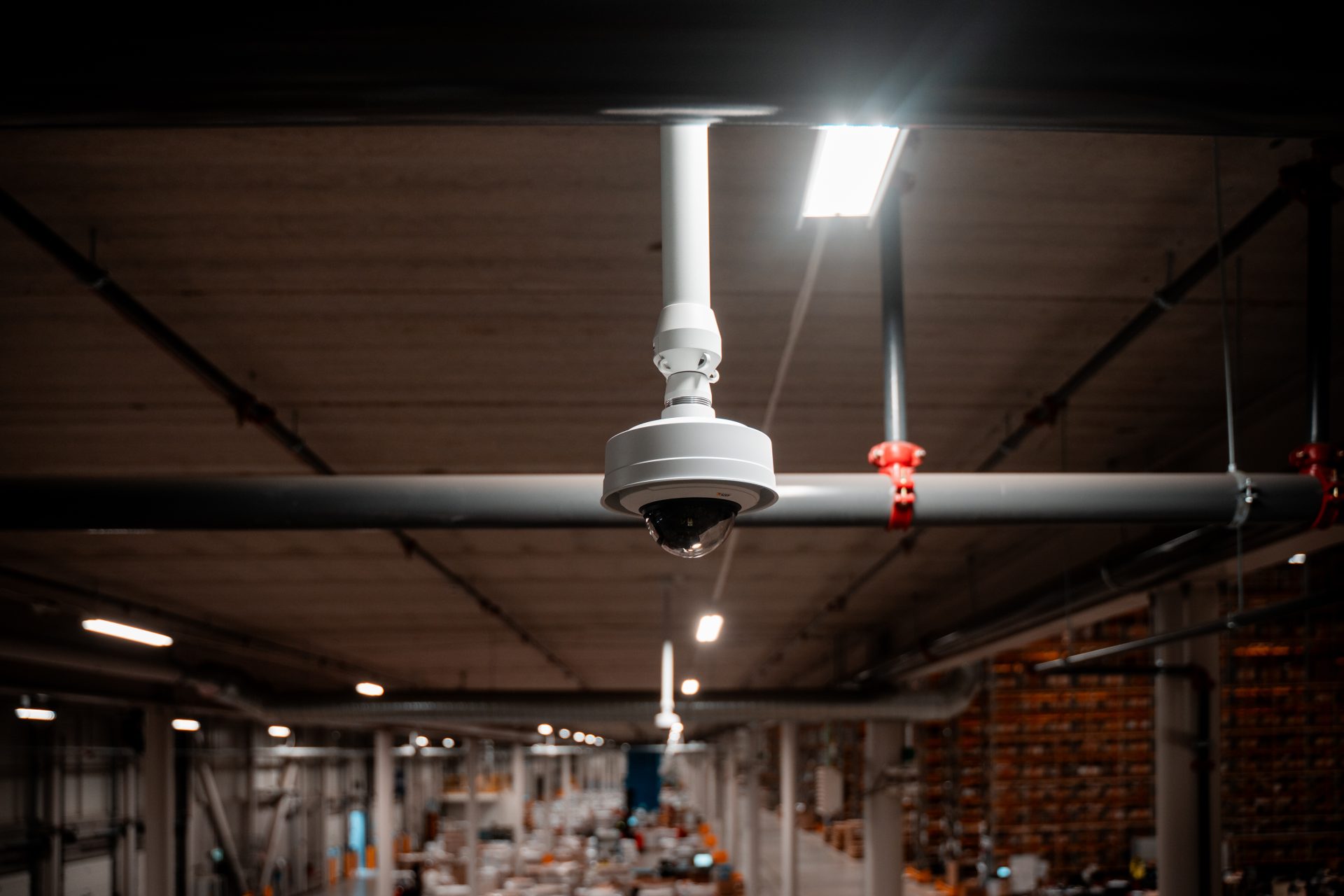
As a property owner or company, you would like to have control over your properties. Both as a large and small actor there is often this interest. Regardless of the type of business you conduct or which properties you as a property owner have in your portfolio, camera surveillance is often a very popular and effective tool to gain precise control and increased security in your premises and properties. While it is very easy to use camera surveillance today as a private actor, there are clear regulations that must be followed. Below I will try to find out what applies to you. Warm welcome!
Before June 20, 2018, when you wanted to install camera surveillance in areas to which the public had access, you had to apply for a permit regardless of whether you were a land or property owner yourself. It was even so strictly written in the previous legislation that you were not allowed to mount cameras that were not in use (such as dummies), but the permit requirement referred to “installation of surveillance cameras”. Today, it is different when camera surveillance is governed by the Camera Surveillance Act (2018:1200) and the GDPR which entered into force on May 25, 2018. The legislator has taken a more practical view of the issue and now all the importance for private actors (most) is placed on how you conduct yourself camera surveillance.
Conducting camera surveillance today requires clear guidelines, a quality-conscious supplier who is well versed in the legislation, a good infrastructure for cyber security and a number of other components. A misconception we often encounter with different types of property owners is that ”these rules do not apply to us” or that ”it is just a formality” and that is not the case. The rules apply to everyone who operates camera surveillance, but there is some camera surveillance that requires a permit and this means that most actors do not have to apply for a permit. This is the big difference compared to the previous legislation and has made it easier for private companies and actors to use camera surveillance.
So to answer the question you have – do we need to apply for a CCTV permit or not? The answer is that it depends on what type of property owner you are or what business you run. Do you own logistics premises and wish to monitor the fence line and the production floor? No, no permit is required. You therefore need guidelines and conduct your monitoring in line with current legislation. Are you, on the other hand, a company that carries out so-called public activities, for example hospital operations? Then a permit is required regarding the camera surveillance. The permit process is currently handled by the Data Inspectorate instead of the County Administrative Board, which handled these previously. Read more about this on the Swedish Data Protection Authority’s website
This means that certain private actors who carry out public activities (activities that the public has the right to take part in, often socially useful functions) are covered by the permit requirement and must have their camera surveillance approved by the Data Inspectorate before it is put into use. However, all cameras and equipment may be installed before permission has been given (in contrast to previous legislation). Other private actors who do not carry out public activities do not fall under the same permit obligation. Finding out exactly what applies to you is impossible to answer in this text as there are a lot of different circumstances to take into account, assessments to make and questions to ask.
For public actors, such as municipalities, the state, county councils and the like, the permit obligation looks completely different and is even more strict. It is an area in itself and will be covered here in a separate section in the future.
Permit applications
We have handled permit applications for real estate companies, authorities, a number of municipalities, public transport and other large companies in the past and have a very high level of expertise in this area. In addition, we have internal control documents, routines, checklists and much else that is required to conduct your camera surveillance in accordance with current legislation. If you wish to get in touch with us regarding these questions, please contact us through the form or on my contact details below. We have a certified competent engineer for camera surveillance who will be able to guide you in these matters.
